
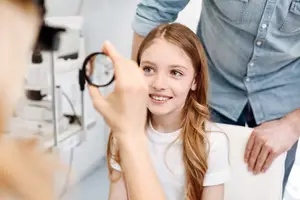
Myopia often begins in early childhood and progresses through the school years. As the eye grows, prescriptions become stronger over time.
In Colorado Springs, many children spend long hours on near tasks like schoolwork and screens. Combined with less time outdoors, these environmental factors can influence how quickly myopia develops.
Common Myopia Signs Parents Notice
You may hear the word nearsightedness during your child’s eye exam. It means your child sees clearly up close, while distant objects appear blurry. Many parents first notice it when a child squints at the board or moves closer to screens.
Other signs include:
- Blurry distance vision
- Squinting
- Holding screens or books very close
- Eye strain or headaches
- Frequent prescription changes
Why Early Eye Care is Necessary
Glasses improve clarity, yet they do not slow the underlying change. Progressive myopia reflects ongoing eye growth, which can affect long-term eye health.
As prescriptions increase, so does the risk of future conditions. Higher levels of myopia are associated with concerns like retinal detachment and other structural changes in the eye.
Myopia management shifts the focus. Instead of reacting to changes, we work to slow them.
Long-Term Risk Factors of High Myopia
As the eye lengthens, delicate structures in the back of the eye experience more strain.
This can increase the likelihood of:
- Retinal detachment
- Myopic macular changes
- Elevated eye pressure concerns
Early care helps guide eye development and reduce these risks over time.
Myopia Treatment Options for Children
Each myopia care plan works differently, though all aim to support healthy eye development while keeping vision clear.
At Bettner Vision, we match treatment to each child’s needs, habits, and comfort.
MiSight Contact Lenses
Soft contact lenses worn during the day that help guide how light focuses on the eye, potentially slowing progression.
Ortho-K (Orthokeratology)
Custom lenses worn overnight that gently reshape the eye, allowing clear daytime vision without glasses or contacts.
Atropine Eye Drops
Low-dose drops are used at bedtime to slow eye growth. Some children notice mild light sensitivity.
Myopia Glasses and Lifestyle Support
Specialized lenses and daily habits work together to support myopia control. Outdoor time and balanced screen use both play a role.
Daily Habits That Support Healthy Vision
Modern childhood includes more screen use and sustained near focus. These patterns can place steady demand on the eyes.
Many local families balance indoor routines with busy schedules. Time outdoors gives the eyes a chance to focus at a distance and reset.
Simple habits can support eye health:
- Take breaks during screen time
- Hold reading materials at a comfortable distance
- Spend time outdoors each day
- Keep up with regular eye exams
These habits support clinical care and help slow myopia progression.
Take the Clear Path with Bettner Vision
Timing makes a big difference. Children between the ages of 6 and 15 often experience the fastest changes in prescription.
Regular pediatric eye exams help us track the signs and step in at the right moment. We assess vision changes, focusing ability, and visual habits. From there, we build a care plan that fits your child’s routine.
We work with families across Colorado Springs to care for growing eyes. If your child has blurry distance vision or frequent prescription changes, this is the right time to schedule their eye exam.
FAQs
At what age should my child start myopia management?
Most children benefit from starting between ages 6 and 12, especially when prescriptions change each year.
Are atropine eye drops safe for children?
Low-dose atropine is widely used in myopia control and considered safe under the care of an eye doctor. Some children notice mild light sensitivity.
Can screen time cause myopia?
Screen time contributes to visual strain and near focus, which can influence progression. Balanced habits and outdoor time support eye health.
Do children need contact lenses for myopia management?
Contact lenses are one option. Some children use atropine drops or ortho-k lenses depending on their needs and comfort.