Skip to content

Keratoconus Treatment and Specialty Contact Lenses in Colorado Springs

Keratoconus is a progressive eye condition that affects the shape of the cornea. The cornea is the clear, dome shaped surface at the front of the eye. In a healthy eye, it is smooth and round. In keratoconus, the cornea gradually becomes thinner and begins to bulge outward into a cone shape.

This irregular shape causes distorted vision that glasses alone often cannot fully correct.

At Bettner Vision in Colorado Springs, we specialize in fitting advanced custom contact lenses designed specifically for patients with keratoconus. With the right lens design and careful monitoring, many patients experience significant improvement in clarity and stability of vision.

woman smiling and wearing eyeglasses in a room
sound wave icon on red background

What is Keratoconus?

Keratoconus often begins during the teenage years or early adulthood. It may progress slowly over time. As the cornea becomes thinner and more irregular, light entering the eye does not focus properly.

Common symptoms include:

  • Blurred or distorted vision
  • Increased light sensitivity
  • Frequent prescription changes
  • Difficulty seeing clearly at night
  • Glare and halos around lights
  • Ghosting or double images

Many patients first notice that their glasses prescription changes more often than usual. Others experience increasing difficulty with night driving.

Early diagnosis is important. Monitoring corneal shape over time allows for more effective management and better long term outcomes.

What is Keratoconus?

Keratoconus often begins during the teenage years or early adulthood. It may progress slowly over time. As the cornea becomes thinner and more irregular, light entering the eye does not focus properly.

Common symptoms include:

  • Blurred or distorted vision
  • Increased light sensitivity
  • Frequent prescription changes
  • Difficulty seeing clearly at night
  • Glare and halos around lights
  • Ghosting or double images

Many patients first notice that their glasses prescription changes more often than usual. Others experience increasing difficulty with night driving.

Early diagnosis is important. Monitoring corneal shape over time allows for more effective management and better long term outcomes.

Close-up of an eye with eyelashes and a teardrop on the iris
Man looking at a pimple on his face in a mirror

Why Glasses Are Often Not Enough

In the early stages of keratoconus, glasses may provide temporary improvement. However, as the cornea becomes more uneven, traditional lenses cannot fully correct the distortion.

Glasses sit in front of the eye. They cannot compensate for an irregular corneal surface.

Specialty contact lenses work differently. They create a smooth optical surface over the cornea. This allows light to focus more accurately on the retina and dramatically improves visual sharpness.

For many patients, the difference between glasses and specialty lenses is significant.

Specialty Contact Lens Options

Every case of keratoconus is unique. That is why treatment requires customized solutions.

At Bettner Vision, we offer several specialty lens designs based on the severity of the condition and the shape of your cornea:

  • Scleral lenses
  • Rigid gas permeable lenses
  • Hybrid lenses
  • Custom soft lenses designed for irregular corneas

Scleral lenses are often recommended for moderate to advanced keratoconus. These larger diameter lenses rest on the white part of the eye rather than directly on the cornea. They vault over the irregular surface and create a smooth layer of fluid between the lens and the eye.

This fluid reservoir not only improves vision but also enhances comfort and protects the cornea.

Rigid gas permeable lenses are smaller and rest on the cornea itself. They also create a smooth refractive surface but may feel less comfortable for some patients.

Hybrid lenses combine a rigid center with a soft outer skirt. They provide crisp vision with improved comfort compared to traditional rigid lenses.

The most appropriate option depends on detailed measurements and a comprehensive evaluation.

A woman with green eyes and white nails is smiling and placing a contact lens on her eye
A young woman with curly hair is placing an eye contact on her left eye while smiling and posing for a photo.

Advanced Technology for Precise Fitting

Fitting lenses for keratoconus requires precision and experience. Corneal topography, also known as corneal mapping, measures the exact curvature and shape of the cornea. This advanced imaging technology allows us to identify even subtle irregularities.

These measurements guide the design of a fully customized lens.

The fitting process may involve multiple visits. Small adjustments can make a meaningful difference in both clarity and comfort. Our goals include:

  • Clear and stable vision
  • Proper lens alignment
  • Long-term comfort
  • Healthy corneal support

At Bettner Vision, our eye care team takes the time needed to ensure the best possible fit.

Monitoring Progression and Long Term Eye Health

Keratoconus is often progressive. Regular follow-up appointments are essential to monitor changes in corneal shape and vision.

In some cases, additional procedures such as corneal cross-linking may be recommended to slow progression. Cross-linking strengthens the corneal tissue and can help stabilize the condition.

Even if progression occurs, specialty contact lenses can often continue to provide excellent visual correction.

Protecting the health of the cornea remains a top priority. Ongoing monitoring ensures lenses fit properly and the eye remains stable.

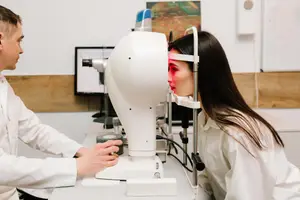
A woman is having her eyes examined by a doctor in a medical room
A man in a grey hoodie sits at a table in a kitchen with a laptop, a glass of water, and glasses. He has his arms crossed and is smiling.

Living Well with Keratoconus

A diagnosis of keratoconus can feel overwhelming at first. However, modern technology and advanced lens designs have significantly improved treatment options.

Many patients with keratoconus are able to:

  • Drive confidently
  • Work comfortably on digital devices
  • Participate in sports
  • Maintain stable vision throughout the day

With customized specialty lenses and regular monitoring, daily life can remain active and productive.

Education and consistent care are key. Understanding the condition helps protect long-term vision.

Schedule Your Specialty Lens Consultation

If you have been diagnosed with keratoconus or suspect that irregular corneal shape may be affecting your vision, a specialty contact lens consultation is the next step.

At Bettner Vision in Colorado Springs, we provide detailed evaluations and advanced lens fittings designed to restore clarity and support long-term corneal health.

Schedule your appointment today to explore customized treatment options for clearer, more stable vision.