
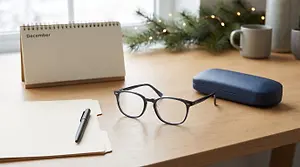
The end of the year has a habit of arriving faster than expected. Between holiday plans, work deadlines, and everything else competing for your attention, checking your remaining vision benefits probably isn't sitting at the top of your list.
However, if you have unused vision benefits or money remaining in a flexible spending account (FSA), this is a good time to find out what is still available. Depending on your plan, those benefits may help cover an eye exam, prescription glasses, contact lenses, or other eligible eye care expenses.
Rather than waiting until the final days of the year, reviewing your coverage now gives you time to determine what you actually need and make thoughtful use of the benefits you've been paying for.
What Does “Use It or Lose It” Actually Mean?
Vision plans and FSAs don't all follow the same rules, which makes checking the details of your specific coverage an important first step.
Your vision plan may provide benefits for routine eye exams, eyeglass prescriptions, contact lens evaluations, and eyewear purchases. Coverage amounts, copays, allowances, and renewal dates can vary considerably between plans, so knowing what remains available can help you plan your care before scheduling an appointment or choosing new eyewear.
Health FSAs operate somewhat differently. These accounts allow eligible employees to set aside pre-tax money for qualified health expenses, including certain vision-related costs. Although FSAs are generally subject to a “use-it-or-lose-it” rule, some employers provide a limited carryover or grace period for unused funds.
Before making plans based on an approaching deadline, review your benefits or speak with your plan administrator so you know exactly what applies to you.
Consider Whether You're Due for an Eye Exam
If your annual eye exam has been pushed aside by a busy schedule, your remaining benefits may provide a practical reason to finally put it back on the calendar.
A comprehensive eye exam does much more than determine whether your glasses prescription has changed. At Bettner Vision, our eye doctors evaluate your vision while also assessing your overall eye health, giving us an opportunity to identify changes that may need monitoring or additional care.
For adults, this can include watching for signs associated with glaucoma, diabetic eye disease, macular conditions, dry eye, and other medical concerns. Children and teens have different visual demands, so their exams can also assess clarity, eye teamwork, and other visual skills that support comfortable reading, learning, and daily activities.
Using your available benefits for an eye exam therefore isn't simply about fitting in another appointment before the calendar changes. It can give you a clearer picture of your current vision and eye health while helping establish what care may be appropriate in the coming year.
Take Another Look at Your Current Glasses
If your eye exam is current, your remaining benefits may be useful for updating eyewear that no longer serves you particularly well.
Glasses can still technically “work” even when scratched lenses, uncomfortable frames, an outdated prescription, or changing visual demands make them less useful than they once were. Someone who spends hours working at a computer, for example, may have different needs than someone who primarily wants clear distance vision for driving and outdoor activities.
Bettner Vision's optical boutique offers eyewear for children and adults alongside several lens options, including single-vision, progressive, high-index, task-specific, photochromic, and anti-fatigue lenses. Rather than choosing lenses based only on your prescription, our optical team can also consider how and where you use your vision throughout the day.
Because we edge lenses in our on-site optical lab, we maintain consistent handling of your prescription throughout the process, from your eye exam to your finished eyewear.
Think Beyond Your Everyday Pair
If your everyday glasses are comfortable, current, and in good condition, your remaining benefits may still be useful for another type of prescription eyewear that better suits a specific part of your routine.
Prescription sunglasses, for instance, can provide clear outdoor vision while reducing your reliance on nonprescription sunglasses worn over contacts or constantly switching between frames. Patients who spend much of the workday in front of a monitor may benefit from task-specific eyewear, while active adults and children may need frames designed to remain secure and provide additional protection during sports.
A backup pair can also be useful when your primary glasses are lost, damaged, or temporarily unavailable. For families with active children, Bettner Vision carries Rec Specs and other sports eyewear designed with physical activity and impact protection in mind.
The goal isn't to add another pair of glasses to a drawer. It's to consider whether different eyewear could solve a practical problem your current pair doesn't address.
Remember Your Contact Lens Benefits
Contact lens wearers should also review their remaining coverage, particularly if they're due for an evaluation or approaching the end of their current lens supply.
A contact lens prescription involves more than transferring the numbers from an eyeglass prescription onto a box of lenses. Your eye doctor considers factors such as corneal health, tear stability, prescription, wearing habits, and daily visual demands when recommending an appropriate lens.
Bettner Vision fits first-time and experienced contact lens wearers and offers options for a wide range of needs, including daily disposables, monthly and two-week lenses, toric lenses for astigmatism, multifocal contacts, and specialty and scleral lenses. We also offer pediatric contact lens options for children undergoing myopia management.
If your existing lenses have become uncomfortable or your vision isn't as consistent as it once was, an updated contact lens evaluation can also provide an opportunity to discuss whether another material, design, or wearing schedule may better suit your eyes.
How Can FSA Funds Fit Into Your Eye Care?
If you participate in an FSA, it's worth checking that balance separately from your vision insurance because eligible vision expenses may provide another practical way to use those funds.
Qualified expenses can include certain forms of vision care and prescription eyewear, although the exact rules and deadlines depend on your plan. While FSAs are commonly associated with the “use-it-or-lose-it” rule, some plans allow a limited amount of unused money to carry over, while others provide a grace period for eligible expenses.
For that reason, don't assume that every remaining dollar disappears automatically on December 31. Checking with your employer or plan administrator can clarify your deadline, remaining balance, and which expenses qualify before you make an appointment or purchase.
Make Your Benefits Work for Your Eye Care Needs
Making the most of your remaining benefits doesn't mean finding something to spend them on simply because the year is ending. Instead, consider whether there are eye care needs you've been putting off or eyewear that would make a meaningful difference in your daily routine.
Perhaps you're overdue for an eye exam, your prescription has changed, or your current glasses have seen better days. You may benefit from prescription sunglasses for driving, task-specific lenses for computer work, or sports eyewear for yourself or your child. Contact lens wearers may also have an opportunity to update their prescription, address persistent discomfort, or replenish their supply.
Schedule Your Appointment Before the Year Ends
Once you know what would actually benefit your vision, you can determine how your remaining coverage may help. Bettner Vision accepts a range of medical and vision insurance plans, and our team can help explain how your benefits may apply to exams, medical visits, contact lenses, and eyewear.
If you still have vision benefits available this year, scheduling ahead gives you time to consider your options without the last-minute rush. Book your appointment at Bettner Vision in Colorado Springs, and let our team help you put your remaining benefits toward eye care that makes sense for you.